


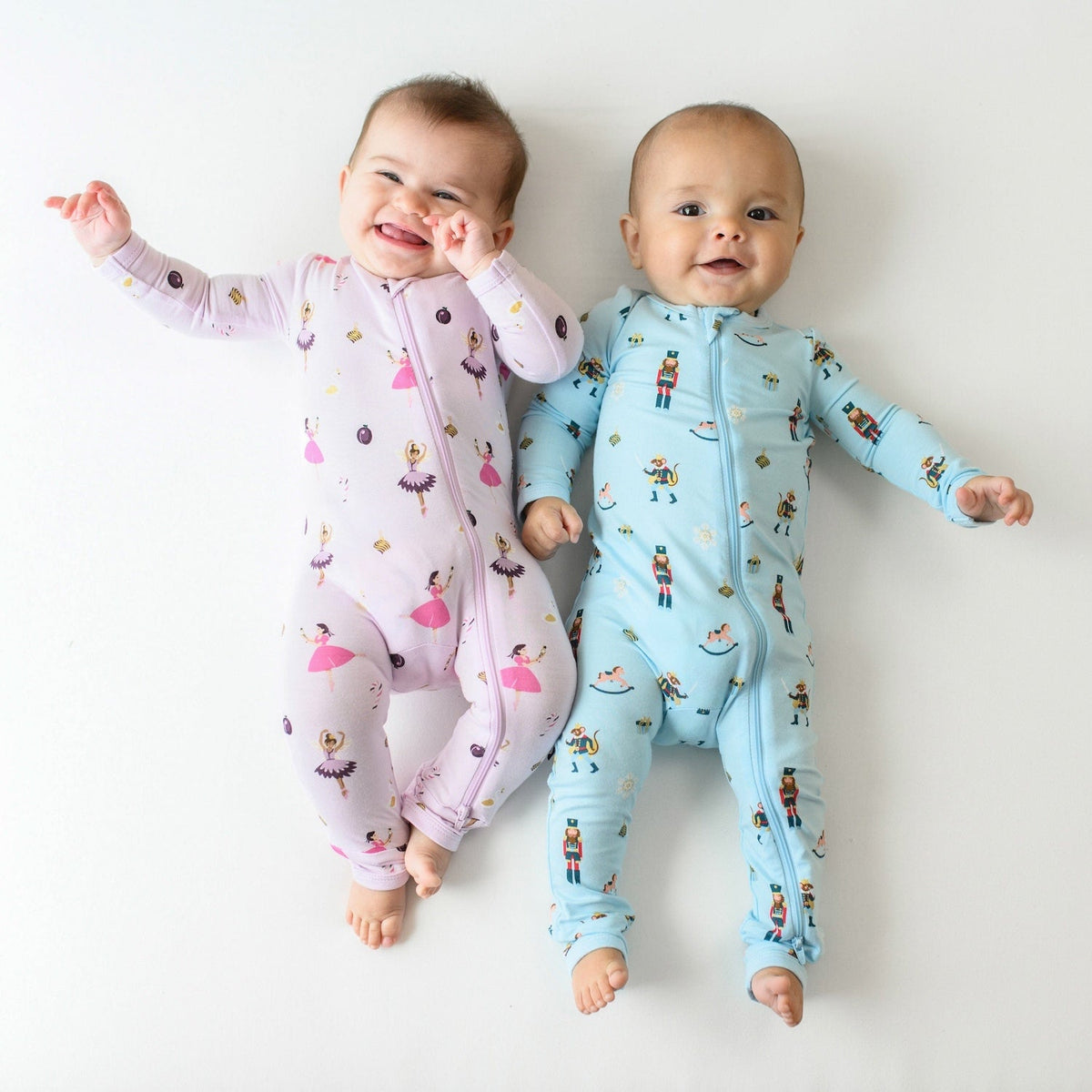
A baby romper is a one-piece outfit that covers your baby's torso and legs in a single easy piece, and it quietly becomes one of the most reached-for items in the wardrobe from the newborn stage well into the toddler years. This baby romper sizing guide walks through the main romper styles (snap, zipper, sleeveless, long sleeve, and short sleeve), how romper sizing works by age and weight, the real difference between a romper and a onesie, and when it actually makes sense to dress baby in a romper instead of reaching for a two-piece set.
What Is a Baby Romper?
A baby romper is a single garment with a bodice and attached shorts or pants, so there is nothing separate to coordinate. Kyte Baby's rompers are made from an ultra-soft, breathable fabric with a stretchy, comfortable fit, and each closes with either snaps or a zipper for fast changes. Unlike a onesie, which only covers the torso, a romper is a complete, one-piece outfit on its own.
Romper Styles: Snap, Zipper, Sleeveless, Long Sleeve and Short Sleeve
Not every romper is built the same way, and the right style usually comes down to your baby's age, the season, and how quickly you need to get through a diaper change.
Snap Rompers
Snap closures run along the legs and sometimes the shoulders, giving you full access for a diaper change without pulling the whole romper off. This makes snap rompers a popular pick for the newborn stage, when changes happen often and every extra second matters.
Zippered Rompers
A zippered romper opens in one smooth motion, top to bottom, which is faster than lining up a row of snaps when you're in a hurry. Many zippered rompers also use a two-way zipper, so you can open from the bottom for a quick diaper change without fully undressing baby.
Sleeveless Rompers
A sleeveless romper is built for warm weather or layering under a light jacket on cooler days. It gives baby's arms room to move during tummy time and play, and it is an easy piece to have on hand once the temperature climbs.
Long Sleeve and Short Sleeve Rompers
A newborn long sleeve romper is the better call for cooler nurseries, air-conditioned rooms, or layering season, while a newborn short sleeve romper works well for warm days and indoor wear. A baby long sleeve romper also comes in handy layered under a cardigan or light jacket once the weather starts to turn, so having one of each on hand covers most of the year without overthinking it.

Baby Romper Sizing Guide
Romper sizing runs by age and weight, not just age alone, so it is worth checking your baby's current weight against the size chart before you buy, especially for a baby who is tracking above or below average for their age.
| Age | Weight Range | Height Range |
| Newborn | 5-8 lbs | Up to 21 in |
| 0-3 Months | 8-12 lbs | 21-24 in |
| 3-6 Months | 12-16 lbs | 24-27 in |
| 6-9 Months | 16-20 lbs | 27-29 in |
| 9-12 Months | 18-22 lbs | 28-30 in |
| 12-18 Months | 20-25 lbs | 30-32 in |
| 18-24 Months | 23-28 lbs | 32-34 in |
Signs It's Time to Size Up
A romper that still fits well should sit snugly without pulling at the snaps or zipper. Watch for tightness around the diaper area, red marks on the shoulders or thighs after wearing, or sleeves and leg openings that have started to ride up. Any one of these is a clear sign to move up to the next size before the current romper becomes uncomfortable.
Romper vs Onesie: What's the Difference
A onesie is a bodysuit that covers only the torso and snaps at the crotch, meant to be worn under pants or as a base layer. A romper is a full outfit on its own, covering the torso and legs in one piece, so there is nothing left to layer underneath. In the romper vs onesie decision, a onesie tends to make more sense for the earliest newborn weeks when frequent changes and easy layering are the priority, while a romper works better once you want a single, complete outfit for a warm day, an outing, or photos.
When to Dress Baby in a Romper
A romper is a great choice any time you want one piece to do the whole job: warm-weather days, indoor play, outings, or a simple outfit that still photographs well. For the newborn stage specifically, a snap or zippered romper with easy leg access keeps frequent diaper changes quick, so there is no real reason to wait to introduce one, as long as the fit is snug and safe (see the safety tips below). Once your baby is layering for cooler weather, a baby long sleeve romper under a cardigan or light jacket keeps that one-piece simplicity going through the fall and winter months too.
When to Move Past Rompers
Most toddlers naturally move away from rompers somewhere between 18 and 24 months, around the same window many families start introducing two-piece sets with an elastic waistband. This tends to line up with growing mobility and the early stages of dressing independence, so it is worth watching your toddler's cues, not just the calendar, when deciding what to reach for next. The CDC's developmental milestones page is a helpful reference if you want a general sense of what independence and mobility look like at each stage.
Baby Romper Safety Tips
A few quick checks make any romper safer for daily wear:
- Check that snaps and buttons are sewn on securely, with no loose threads
- Skip rompers with long drawstrings or cords around the neck or waist; the Consumer Product Safety Commission has published guidance on drawstring hazards in children's clothing
- Make sure the collar sits close enough that it will not ride up over baby's chin or mouth while lying down or sitting in a car seat
- Confirm the leg openings are snug but not tight, so there is no gap loose enough to catch on furniture or a car seat buckle
Still building out the rest of the wardrobe? Our guide on what newborn clothes you need covers the full essentials list alongside rompers.
Ready to shop? Explore our full baby rompers collection, or go straight to long sleeve rompers, zippered rompers, snap rompers, or sleeveless rompers if you already know the style you're after.
